
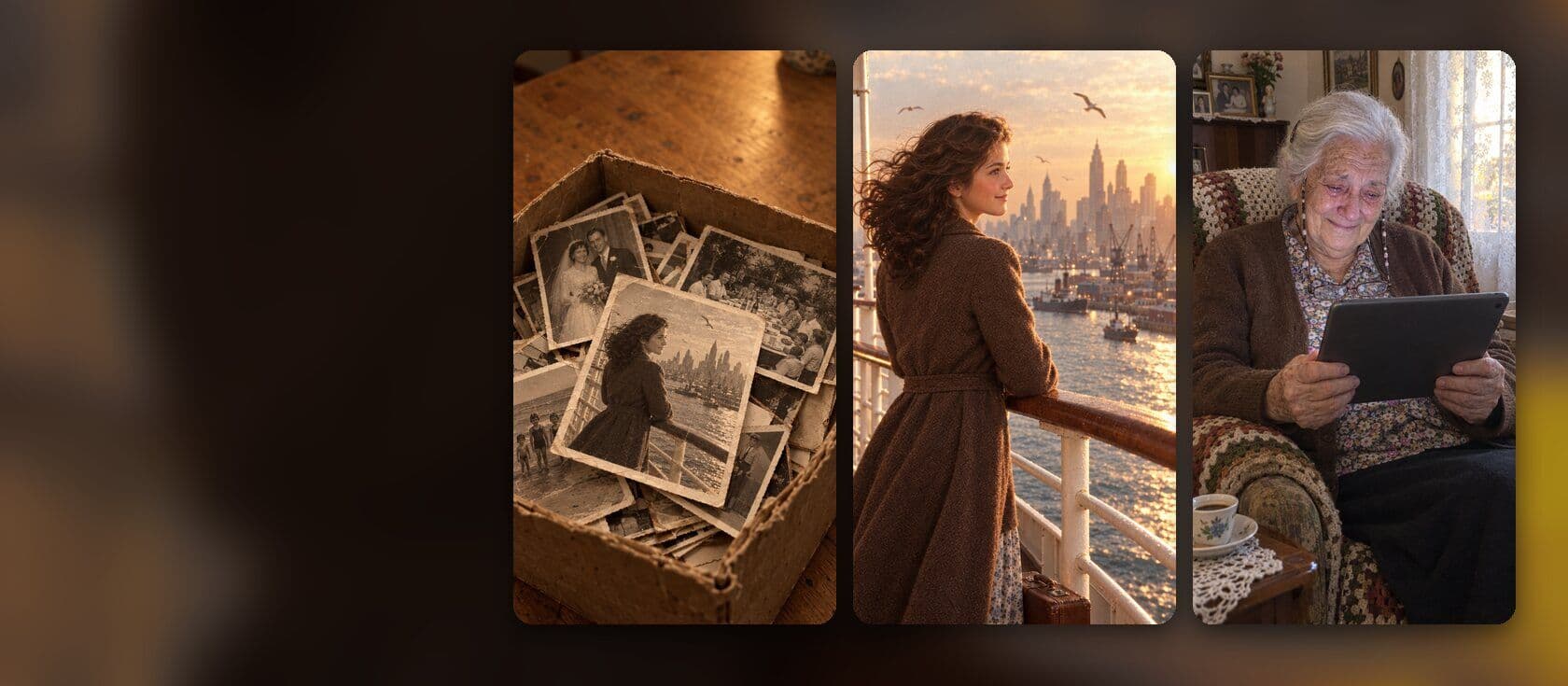
Faceless story videos: narration over pictures
The oldest running ad among the faceless-video tools we studied, live for 115 days, opens on an AI Bible story. A top AI drama app tells most of its first episode as narration over stills. Faceless stories need no actor and no lip-sync, which makes them the easiest format to post every day.
The format
A voiceover tells one story in 30 to 90 seconds. Every line gets a picture: a still with a slow push-in, or a short clip. Captions carry every word. The channel keeps one look, one voice and one kind of story, so a viewer knows what the next video will be.
Pick a story people binge
Niches that suit narration: the strange moments of history, myths and Bible stories, family and immigration stories, true crime, cartoons for kids. Pick one and stay in it. A channel that changes topic every day is hard for the app to recommend and hard for a viewer to follow.
Make one in ViewPress
Paste the story or describe it, then type: “A 60-second faceless video, narration over pictures. My grandmother left Naples on a ship in 1956 and arrived in New York with one suitcase. Warm, cinematic, vintage film look. One picture per line, slow push-ins, soft piano.” The agent writes the narration first, then plans one scene per line and sizes each scene to its words. Pick a voice, or make one on the project’s Voices page, and keep it for the channel.
Narration first, pictures second
Write the voiceover first and time the pictures to it, at about 3 words a second. A 60-second video is about 180 words and 15 to 20 pictures. Use stills with motion for most lines and keep moving clips for the moments that matter: the ship coming into the harbour, the door opening.
The first line
The first line is the hook. State the strange fact or the stakes at once: “In 1956, my grandmother crossed an ocean with one suitcase and an address that no longer existed.” Specific numbers and dates beat vague claims.
Pitfalls
A voice that sounds robotic: try two voices before you choose. A main person who looks different in every picture: save them as a character so the same face appears each time. Ten topics in ten days: pick one.
Frequently asked
Can faceless videos earn money?
Yes, when they are original and add something. TikTok’s Creator Rewards pay roughly $0.40 to $1.00 per 1,000 qualified views, and YouTube shares 45% of its Shorts ad pool by view share. Both have audience thresholds first.
How often should I post?
One a day is a good start. Story videos are quick to make, and a back catalogue gives the app more chances to find your audience.